The Watchdogs of College Education Rarely Bite (The Wall Street Journal)
The Journal uses plenty of data to talk about a dimension of the college graduation/loan default rate conversation that has seemed to have been left alone until now: accreditation. Although it lays blame without really laying blame, the article offers several statistics on how many colleges accreditors have closed, and what the graduation and loan default rates are at those colleges they haven't.
Showing posts with label Ed Quality. Show all posts
Showing posts with label Ed Quality. Show all posts
Friday, June 19, 2015

Monday, June 1, 2015
Articles for June 1, 2015
Adult Course Offers Learning for the Sake of Learning (npr.org)
Imagine that: intrinsic motivation increases success and value in higher education. This kind of motivation makes going to college more meaningful than just getting a degree for the end goal of making more money at a better job--and I say "just" because it should be one reason, not the only reason.
The students at the program in this article are those students that we, in the learning center, see the most often. These are the students who traditionally need the most help, and are most likely to drop out before completion. Why? Just a handful of lines down the page, we find an answer:
Imagine that: intrinsic motivation increases success and value in higher education. This kind of motivation makes going to college more meaningful than just getting a degree for the end goal of making more money at a better job--and I say "just" because it should be one reason, not the only reason.
The students at the program in this article are those students that we, in the learning center, see the most often. These are the students who traditionally need the most help, and are most likely to drop out before completion. Why? Just a handful of lines down the page, we find an answer:
"'I was so freaking nervous,' Mitchell says, 'because I felt so dumb. You know, I felt like I was too old.'"
Wednesday, January 14, 2015
The Repeat Grand Finale
One of my best friends is a corporate trainer, and a regular topic at our monthly lunch dates is teaching for different generations. We talk a lot about teaching the Millennial generation and how that generation gets dumped on quite a bit, and adjusting teaching for multiple generations in the same classroom. She's got some interesting views on this particular part of teaching, and I always come
away with a new book to read or a promise that she'll send me this article. It's a dimension of teaching not included in traditional teacher prep since most K-12 classrooms include students of the same(ish) age; this is not the case in higher ed or in corporate training classrooms.
My classes this semester just happened to be dominated by recent high school graduates. Most have a semester of college now behind them, but a residual green-ness is still evident. Naturally, the different approaches I need to take now have been the focus of my prep time, especially since these same characteristics are typically those of students who don't do so well in or fail my classes.
Two pieces got me thinking further about this. The first is a YouTube video sent to me by my co-worker the other day, Branford Marsalis' Take On Students Today, in which the speaker shares that his music students seem to be "only interested in how good they are, and how right they are." The most provocative part comes at about 0:43:
Just hold onto that for a second.
The second is the buzz around Sec. Arne Duncan's speech on reauthorizing NCLB, (for background, read this EdCentral post), particularly the changes to the testing mandates that are said to set limits and streamline the process.
Now, back to Marsalis. Marsalis was referring to the idea of being a musician instead of actually working to be a musician, but the same could be said for students in general. The idea of being a student is more important than actually working to be a student; the idea that you learned something is more important than actually learning it.
And it seems that testing reinforces "the idea of" instead of the "actually being."
A great comment on the Marsalis YouTube post says this:
Assessment itself is absolutely essential, and we need to keep working to find a balance. But I came to this when I started comparing the standardized, high-stakes, all-encompassing tests we ask K-12 students to do relatively often to the local, low-pressure, subject-specific assessments my co-worker uses in his AUTO classroom. Why do his assessments seem to work so much better? Because the instructor considers the action involved in producing the answers? Because students are held to get 100% before moving on? Because the instructors then use the results to inform teaching? Because they are local? All of the above!
The nature of assessment in this classroom reflects progress, improvement, and opportunity. Students are well-aware that they are in the process of learning, not at the end; that the process requires certain actions and they won't be able to simply sit through the class and "get by"; and that the assessments are part of the process of learning, not the finale.
In my classroom in post-secondary, the students who struggle the most are recently graduated seniors students. They often struggle to find that new definition of what it means to be a student, to redefine what "good enough" now means or what "enough studying" now means, or to find the nuances that will guarantee them a good score. It takes a few weeks for most to figure out that the answers to the first two are outside their comfort zone, and that I'm looking for more than just regurgitation of my own brilliance. They can't just sit through the test and call themselves students.
 |
My classes this semester just happened to be dominated by recent high school graduates. Most have a semester of college now behind them, but a residual green-ness is still evident. Naturally, the different approaches I need to take now have been the focus of my prep time, especially since these same characteristics are typically those of students who don't do so well in or fail my classes.
Two pieces got me thinking further about this. The first is a YouTube video sent to me by my co-worker the other day, Branford Marsalis' Take On Students Today, in which the speaker shares that his music students seem to be "only interested in how good they are, and how right they are." The most provocative part comes at about 0:43:
"...the idea of what you are is more important than you actually being it..."
Just hold onto that for a second.
The second is the buzz around Sec. Arne Duncan's speech on reauthorizing NCLB, (for background, read this EdCentral post), particularly the changes to the testing mandates that are said to set limits and streamline the process.
Now, back to Marsalis. Marsalis was referring to the idea of being a musician instead of actually working to be a musician, but the same could be said for students in general. The idea of being a student is more important than actually working to be a student; the idea that you learned something is more important than actually learning it.
And it seems that testing reinforces "the idea of" instead of the "actually being."
A great comment on the Marsalis YouTube post says this:
"...some of my teachers were great, but they let us know that we were just students in the process of learning." [Emphasis mine]Assessments and tests imply that learning is finished. Try as we might to implement both formative and summative assessment or call it "progress monitoring," tests still trigger a sense of completion and stand for an end, a finished product in some manner. If we constantly test our students, we constantly tell our students that they are "finished" and the process of learning is cut short. The actual learning that occurred is less important than the idea that the student learned something. Taking a test is part of being a student, so it's more important to take the test and adhere to the idea of being a student than to actually be a student.
Assessment itself is absolutely essential, and we need to keep working to find a balance. But I came to this when I started comparing the standardized, high-stakes, all-encompassing tests we ask K-12 students to do relatively often to the local, low-pressure, subject-specific assessments my co-worker uses in his AUTO classroom. Why do his assessments seem to work so much better? Because the instructor considers the action involved in producing the answers? Because students are held to get 100% before moving on? Because the instructors then use the results to inform teaching? Because they are local? All of the above!
The nature of assessment in this classroom reflects progress, improvement, and opportunity. Students are well-aware that they are in the process of learning, not at the end; that the process requires certain actions and they won't be able to simply sit through the class and "get by"; and that the assessments are part of the process of learning, not the finale.
In my classroom in post-secondary, the students who struggle the most are recently graduated seniors students. They often struggle to find that new definition of what it means to be a student, to redefine what "good enough" now means or what "enough studying" now means, or to find the nuances that will guarantee them a good score. It takes a few weeks for most to figure out that the answers to the first two are outside their comfort zone, and that I'm looking for more than just regurgitation of my own brilliance. They can't just sit through the test and call themselves students.
Wednesday, September 10, 2014
Reflective Teaching Blog Challenge Day 6: A Good Mentor
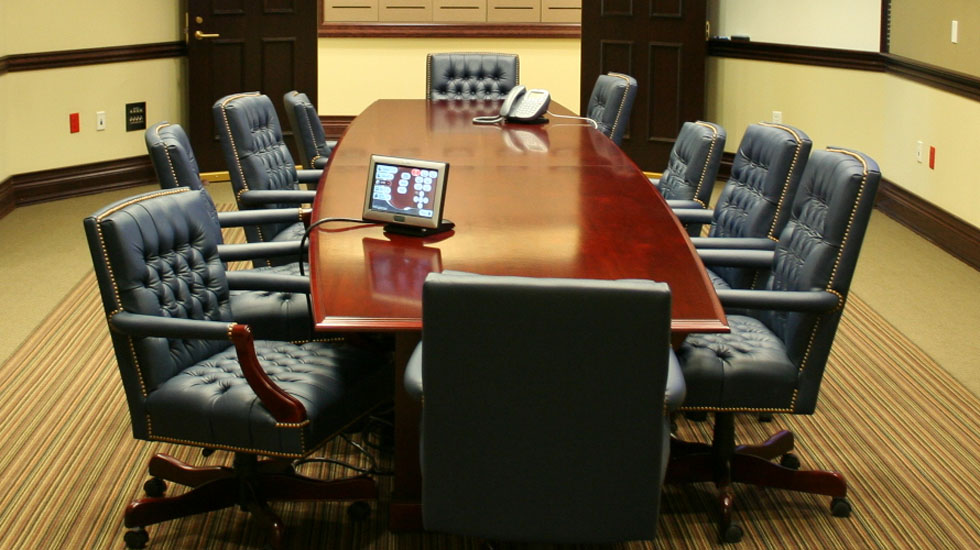
As a teacher, I'm more comfortable in the role of the mentor, not the men-tee. Personally, mentorship is very much a professional growth area because it's difficult for me to admit what is implied by the need for a mentor. Mentorship means I need to admit that I don't know everything, which is terrifying since I take great pride in and prove my value by doing my own homework, figuring things out for myself, and then creating a product that meets my own high standards.
I don't think I'm alone either. Many of my fellow teachers - co-workers, community members, teacher peers - seem to take a similar approach. For some of those fellow teachers with more experience, there is another dimension: "I've been teaching this way for ___ years and it's seemed to work fine. I don't need a mentor." That stigma attached to the outward expression that a teacher would like a mentor is, for a lot of us, a stinging bruise to the ego.
But my definition of a good mentor fits within this developing acceptance of a need for mentorship. A good mentor is the best mentor when she doesn't even realize she's a mentor. That mentorship is almost invisible. This is important because the difference between a mentor and a teacher is this: a teacher is very plainly in front of the classroom for the purpose of guiding and inspiring, while a mentor's best lessons are those that are not explicitly taught. And for those of us still working to accept that part of our professional growth, seeing another teacher as a mentor without making it known can help scaffold that acceptance.
What's more, a good mentor relationship is be beneficial for both sides. Just as an essential part of teaching is continuing to learn, a mentoring relationship should be one in which both parties are able to feed off of the development of the other. Furthermore, just as good teaching means more than just duplication and repetition, a mentor is not one to be merely copied as a template, but rather inspired by each other.
This can be a rather tall order for a single mentor-mentee relationship. In I Shouldn't Be Telling You This by Kate White, I read about a suggestion particularly for female professionals: have a personal board of directors. This is a group of professional women in your life, each of whom can provide mentoring in an individual facet of one's professional development. I find this to be a relatively non-threatening way to spur my own growth since there's no need to notify these members of their status in any more specificity than "Hey, when I have a question about classroom discipline, would you feel comfortable talking about that with me?" My "board" includes an expert in the area of formal education credentials (Ph.D.? Ed.D.? another M.A.?), business relationships, leadership development, and, of course, instruction.
In fact, I imagine that mentor standing in the back of my room for every lesson I teach. I imagine her reaction as she reads each lesson plan, her feedback to assignment cover sheets, her body language as she sits in the back of my room during class discussion. She's one more way I keep myself accountable.
One of my best summer reads was Mindset by Carol Dweck because it sparked the area of professional growth I need to work on next. Personally, I make a conscious effort to have a "growth mindset," especially in the hopes that this mindset will be acquired by my sons. But in teaching, I still have a hard time accepting "areas of improvement." The suggested "board of directors"ideas has proven to be fulfilling and invigorating, and I advise any young professional to try it out.
Thursday, September 4, 2014
Reflective Teaching Blog Challenge Day 4: For the Love of Teaching
Call it my work style, my sign (Libra), or my personality, but I've always been a balancer, a middle-grounder, a neutralizer. I neither excelled nor bombed in the sports and activities I participated in when I was younger. I don't consider myself exceptionally intelligent, but I know I'm not anywhere near unintelligent. In most areas of my life, I'm competent, but not a master; knowledgeable enough to have the basic idea, but not so much to call myself much of an expert.
Except in teaching. Teaching is the one area of my world that I feel like every part of me was made for. I am confident in my ability. I'm comfortable saying that I'm good enough to be able to really push my own limits and challenge my skill. I love being able to learn new things and ignite students' thinking with it (hence the name of the blog). I love how complex it is and - this feels really selfish to say - how it gives me a chance to really take off, be a great example, inspire other teachers, and lead the pack. I say it feels selfish because teaching is supposed to be a selfless, thankless job; I find it to be almost the opposite.
Teaching fits with this balance theme as well, especially where I'm at right now. My current classroom is the perfect platform to give me the freedom I need to exercise my own control and creativity, yet still have a larger objective to work toward and answer to. I can move between independent learning and large-group discussion. Teaching, for me, is the perfect blend of physical movement and focused desk work; working with people and working solo; working with adults and working with students; business and, well, not business.
When I was three years old, I decided I wanted to be a teacher because I wanted to be able to draw on the chalkboard in Sunday School. As I got into elementary school, I made my own grade books, asked for old textbooks, had my mom buy a couple flip-top desks from a garage sale, held "school" on our days off (how exciting to be able to bring my pretend class to music at the actual time I had music in my class!), and gave lessons on the chalkboard for hours.
Now, I'm in a position where my educational background and fire for teaching is in the minority. Most of my co-workers are content specialists, giving up a job in the industry to teach or using teaching as a way to make something of their field. Not many of my fellow faculty members have had much in the way of teacher training, and it's certainly not on the forefront of their minds.
And so it appears that I have a rather large, although unspoken, opportunity staring me in the face. There are new balances to strike, and I'm totally in for the challenge.
Thursday, July 24, 2014
If Education Took the DiSC

Instead of a test for innovation, I think we should give Education the DiSC.
First, some housekeeping. My uncles were giving me grief the other weekend for blogging about the same topic over and over (I believe "one-trick pony" was the exact term...), so I'm hoping to use enough jargon to weed them out before I start in:
Pedagogy. Metrics. Assessment. Correlation. Critical thinking. Active learning. Maker movement. BYOD. Competency-based education. Intrinsic motivation. Growth mindset.
There, that oughta do it.
Subscribe to:
Posts (Atom)